
Oklahoma District Court Structure
Oklahoma runs its justice system through District Courts, and they serve as the main trial courts in every county. A single District Court handles both sides of the docket. It hears civil claims between private parties, and it hears criminal charges brought by the state. The Oklahoma.gov District Courts page confirms this dual role and explains that civil appeals move to the Oklahoma Supreme Court while criminal appeals move to the Oklahoma Court of Criminal Appeals.
Wagoner County fits into this statewide design. The District Court sits in the county courthouse and shares the building with the Court Clerk, the County Clerk, the District Attorney, and the Sheriff. That cluster makes the courthouse a near one-stop spot for filings, payments, and copies, though the exact office still matters for each task.
The county itself is one of the faster-growing areas in northeast Oklahoma, which shapes how busy the court stays. The U.S. Census QuickFacts table lists a July 2024 population estimate of 91,257 and a 2020 count of 80,981.
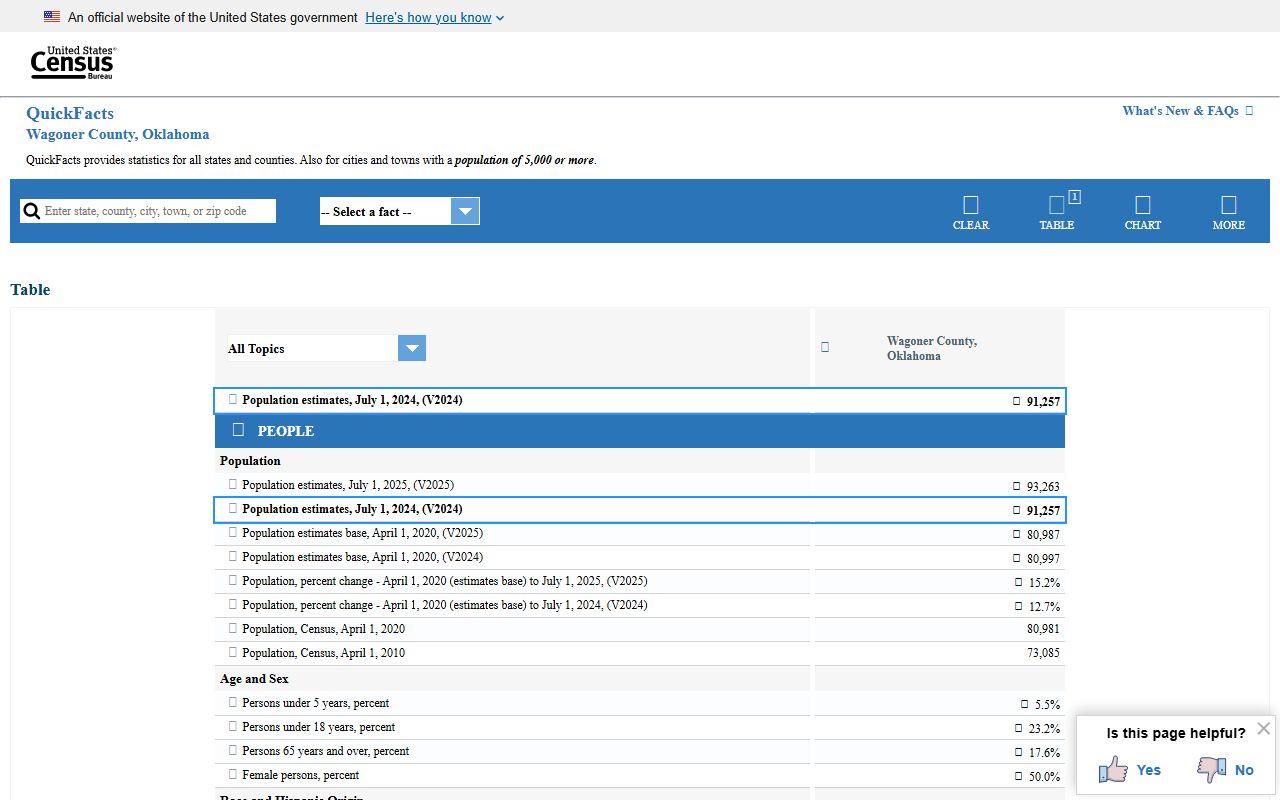
That population growth means a steady flow of civil, criminal, family, and probate filings through the Wagoner County District Court each year. A larger resident base also widens the pool of small claims, protective orders, and traffic cases the court manages.
Wagoner County Courts and Judges
The county courthouse seats three judicial officers who divide the District Court workload by courtroom. Each judge works with a bailiff and a court reporter, and the assignments are posted on the official Wagoner County Courts page. The table below lists the District Court, its judges, and the related courts and offices that share or border its jurisdiction.
| Court / Office | Role | Address | Phone / Notes |
|---|---|---|---|
| Wagoner County District Court | General trial court for civil, criminal, family, probate, protective orders, small claims, and state traffic cases | 307 East Cherokee, Wagoner, OK 74467 | Mon-Fri 8 AM-4:30 PM |
| Hon. Doug Kirkley | District Judge, Courtroom 1 | 307 East Cherokee | Bailiff Janet Watkins; reporter Amber Sanders |
| Hon. Rebecca Hunter | Associate District Judge, Courtroom 2 | 307 East Cherokee | Bailiffs Gina Kirkley and Kathy Witten; reporter Nicole Martin |
| Hon. John David Luton | Special District Judge, Courtroom 4 | 307 East Cherokee | Bailiff Jami O'Dell; reporter Carol Rasmussen |
| Wagoner Municipal Court | City ordinance, local traffic, and municipal misdemeanor matters | 231 Church Street, Wagoner, OK 74467 | 918-485-2554 |
| Broken Arrow Municipal Court | Traffic and misdemeanor offenses under city ordinances | 220 S. First Street, Broken Arrow, OK 74012 | 918-451-8558 |
| District Attorney District 27 | State prosecutions for Wagoner, Adair, Cherokee, and Sequoyah | 307 E. Cherokee, Wagoner, OK 74467 | 918-485-2119 |
District Judge Doug Kirkley, Associate District Judge Rebecca Hunter, and Special District Judge John David Luton hear the bulk of county cases. The two municipal courts and the District Attorney appear in the table because they sit next to the District Court in everyday practice, even though their roles differ.
Wagoner County in the 15th Judicial District
For court administration, Wagoner County belongs to Oklahoma's 15th Judicial District. That district groups it with Cherokee, Sequoyah, Muskogee, and Adair Counties. Judges, dockets, and court staffing across these counties fall under the same administrative umbrella, which is why a drug court contact may point you toward Tahlequah as well as Wagoner.
Prosecution follows a different map. Criminal cases in Wagoner County are charged by District Attorney District 27, which covers Wagoner, Adair, Cherokee, and Sequoyah Counties. Muskogee is not part of that prosecution group. The current district attorney is Jack Thorp, and the local office sits inside the courthouse on East Cherokee. The District 27 District Attorney page describes the office mission as vigorous prosecution paired with protection of victims' rights.
The county's own statistics page adds useful local framing for anyone weighing how large this caseload base is. The official County Statistics page lists a land area of 561.56 square miles, roughly 57.7 people per square mile, and a median household income near $61,364.
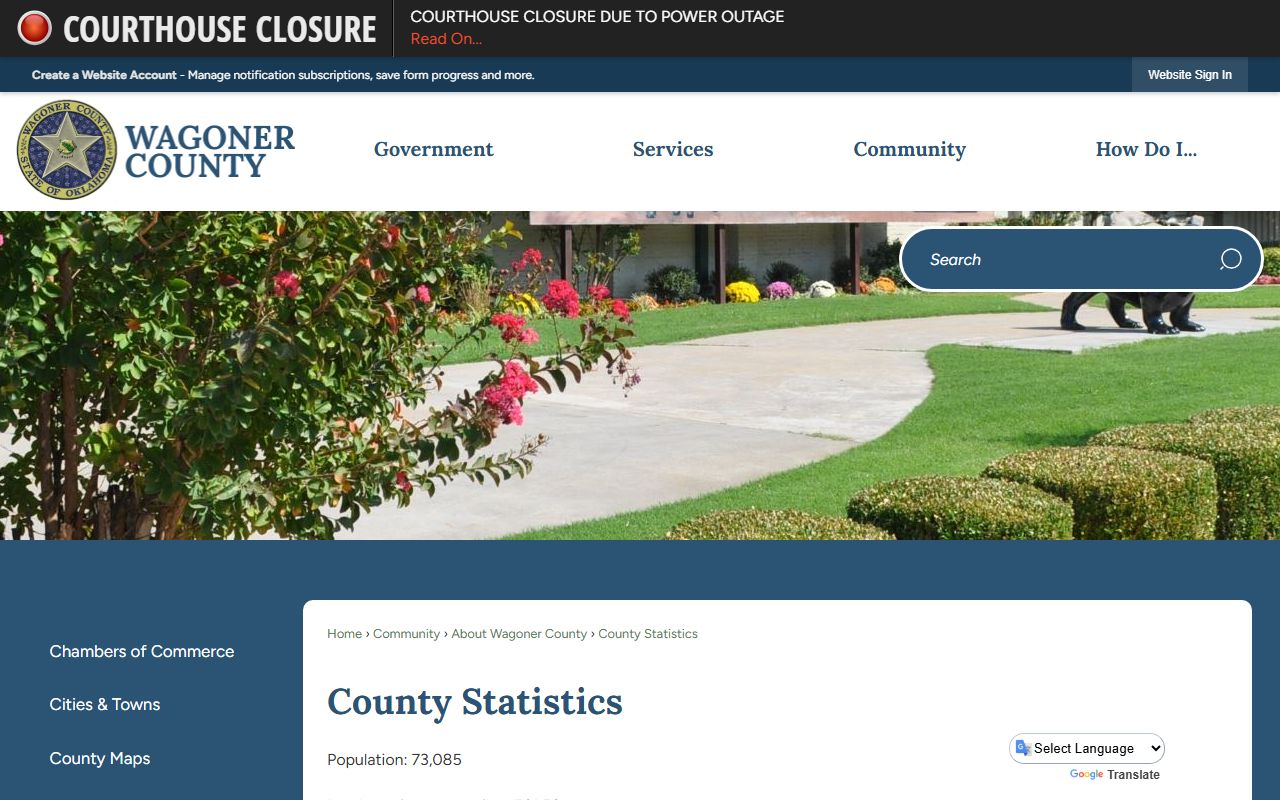
Those numbers explain the reach of a single rural and suburban district court. Cases arrive from small towns, farmland, and the fast-growing Broken Arrow side of the county alike.
Wagoner County District Court Case Types
The District Court handles a wide span of matters, which is the point of a general trial court. Civil and criminal dockets share the same courthouse and the same judges. Family, probate, and protective-order cases all run through the District Court as well, since Oklahoma has no separate standalone probate or family court at the county level.
Common case categories filed with the Wagoner County District Court include the following:
- Civil suits, including contract disputes, money judgments, evictions, and name changes
- Criminal cases, both felony and misdemeanor charges brought by the state
- Family matters such as divorce, custody, and child support
- Probate of estates, plus guardianship and conservatorship
- Protective orders for safety and contact limits
- Small claims for lower-dollar disputes
- State and county traffic citations that fall outside city courts
Oklahoma docket numbers signal the case type with a prefix, such as CF for felony, CM for misdemeanor, CV for civil, FD for family or divorce, PB for probate, PO for protective order, SC for small claims, and TR for traffic. Recognizing the prefix is the quickest way to read what a Wagoner County case actually involves before you open the full record.
District Court vs Municipal Court
One of the most common points of confusion is venue. Many residents assume every local case lands in the District Court, but city tickets and ordinance violations belong to municipal courts instead. Wagoner Municipal Court and Broken Arrow Municipal Court handle city-code matters, and those cases may never appear in the county District Court docket. The comparison below shows where each type of case lives.
| District Court | Municipal Court | |
|---|---|---|
| Case types | Felonies, misdemeanors, civil suits, family, probate, protective orders, small claims, and state traffic | City ordinance violations, local traffic, parking, and municipal misdemeanors |
| Examples | Divorce, felony charge, estate probate, eviction, protective order | Speeding inside city limits, code violation, city traffic citation |
| Where records live | Court Clerk plus ODCR and OSCN online dockets | City court clerk; Wagoner city tickets also appear on the TrafficPayment vendor page |
Broken Arrow's court page is explicit on this split. It says its municipal court covers traffic and misdemeanor offenses under city ordinances, while felonies and state-law misdemeanors are prosecuted in the Tulsa or Wagoner County District Courts. The City of Wagoner Municipal Court page adds local rules of its own, including a no-unscheduled-appearances policy that asks defendants to email or write the court clerk to be placed on a docket.
Note: A city traffic ticket and a state traffic citation are not the same record, so confirm which court issued the case before you search for it.
How a Wagoner County Case Moves Forward
Cases follow two main paths through the system, and they split early by whether the matter is criminal or civil. Both tracks start in the District Court and can end at a state appellate court. The flow diagrams below trace each route from the first filing to a possible appeal.
Criminal flow: Arrest › Initial Appearance › Charges Filed by the District Attorney › Arraignment › Preliminary Hearing › Pretrial › Plea or Trial › Sentencing › Appeal to the Oklahoma Court of Criminal Appeals
Civil flow: Petition Filed › Answer › Discovery › Pretrial › Trial › Judgment › Appeal to the Oklahoma Supreme Court or Court of Civil Appeals
The early steps for a criminal case may begin at the jail or with the Sheriff, but the formal charge that opens a District Court file comes from the District Attorney. On the civil side, the case opens when a party files a petition with the Court Clerk and the other side answers. Most of the docket activity you can read online tracks these stages in order.
Specialty Courts in Wagoner County
The District Court also runs several problem-solving programs that aim to address the root causes behind certain cases. These specialty dockets handle eligible defendants through supervision and treatment rather than ordinary sentencing. The county posts direct phone numbers for each one on its official courts page, which is the best starting point because eligibility is reviewed case by case.
- Adult Drug Court, Wagoner: 918-485-7774
- Adult Drug Court, Tahlequah: 918-207-0949
- Community Sentencing: 918-485-5083
- Juvenile Drug Court: 918-485-7746
- Mental Health Court: 918-485-7991
Adult Drug Court is the strongest local signal here. It generally serves defendants whose conduct is tied to substance use and who are suited to intensive supervision. The two listed contacts, one in Wagoner and one in Tahlequah, reflect the multi-county footprint of the 15th Judicial District. Juvenile Drug Court is listed on its own because juvenile records are treated differently and are usually not open to public search the way adult cases are.
Note: Mental Health Court and juvenile programs may keep treatment details confidential even when a basic criminal docket entry remains public.
Appeals From the Wagoner County District Court
A District Court ruling is not always the end. Oklahoma splits its appeals by case type. Civil appeals go to the Oklahoma Supreme Court, which may keep a case or assign it to the Oklahoma Court of Civil Appeals for an intermediate review. Criminal appeals follow a separate track entirely and go to the Oklahoma Court of Criminal Appeals. The two top courts do not overlap, so the type of case decides the path.
Federal matters are different again. Wagoner County sits in the U.S. District Court for the Eastern District of Oklahoma, a federal court that is wholly separate from the county system. Cornell's listing of 28 U.S.C. 116 places Wagoner in the Eastern District and names the cities where that court holds session, including Muskogee.
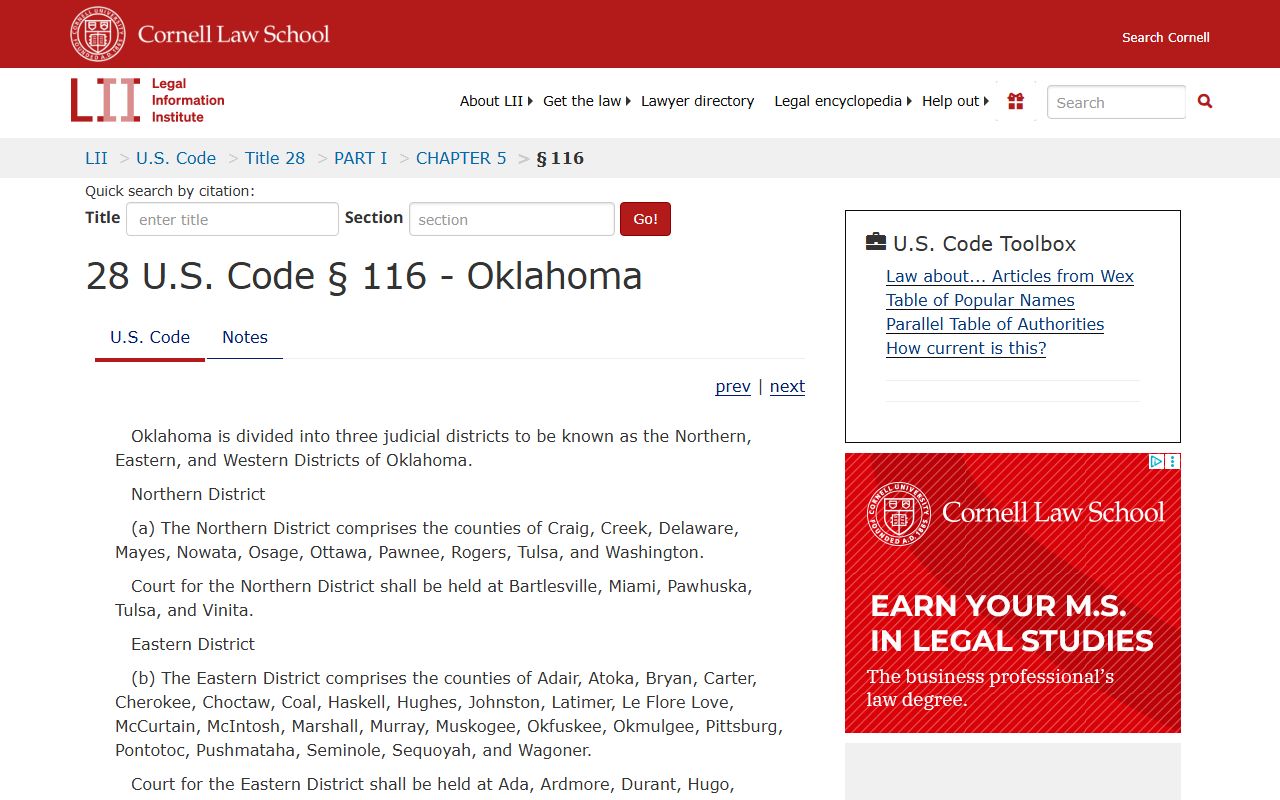
Federal crimes, federal civil-rights claims, and federal-question lawsuits are filed in that court, not in the District Court, and they are searched through PACER instead of the state systems. Anyone weighing whether a matter is local or federal can review the details on the Wagoner County federal courts page.
Wagoner County Court Clerk and District Attorney
Two offices do the heavy lifting around the District Court docket. The Court Clerk keeps the records, and the District Attorney brings the state's criminal cases. Knowing which office to call saves time when you need a copy, a payment, or an answer about a charge.
The Wagoner County Court Clerk, led by Jim Hight, files and maintains District Court proceedings, small claims, protective-order forms, fines and costs, marriage licenses, and copies of divorce decrees. The office is the practical source of truth for certified copies and for older files that were never digitized. Online dockets cover recent activity, but a full case copy still comes from the Court Clerk, and you can review request steps and forms through the Court Clerk page.
The District Attorney for District 27 decides what charges to file and prosecutes them in the District Court. Defendants who cannot afford a lawyer are represented through the Oklahoma Indigent Defense System rather than by direct hire, and the OIDS Wagoner coverage page lists the assigned contractor for appointed cases. To browse filed cases and dockets yourself, the county points the public to the Wagoner County court records portals on ODCR and OSCN.